
In July, the dental minister, Stephen Kinnock MP confirmed that he wants a reformed contract in place by the end of this Parliament, before the middle of 2029. For this to be possible, formal negotiations will need to begin within the next year.
Listening to the profession
I want to go to the negotiating table with a clear understanding of what the profession wants to see from a reformed contract.
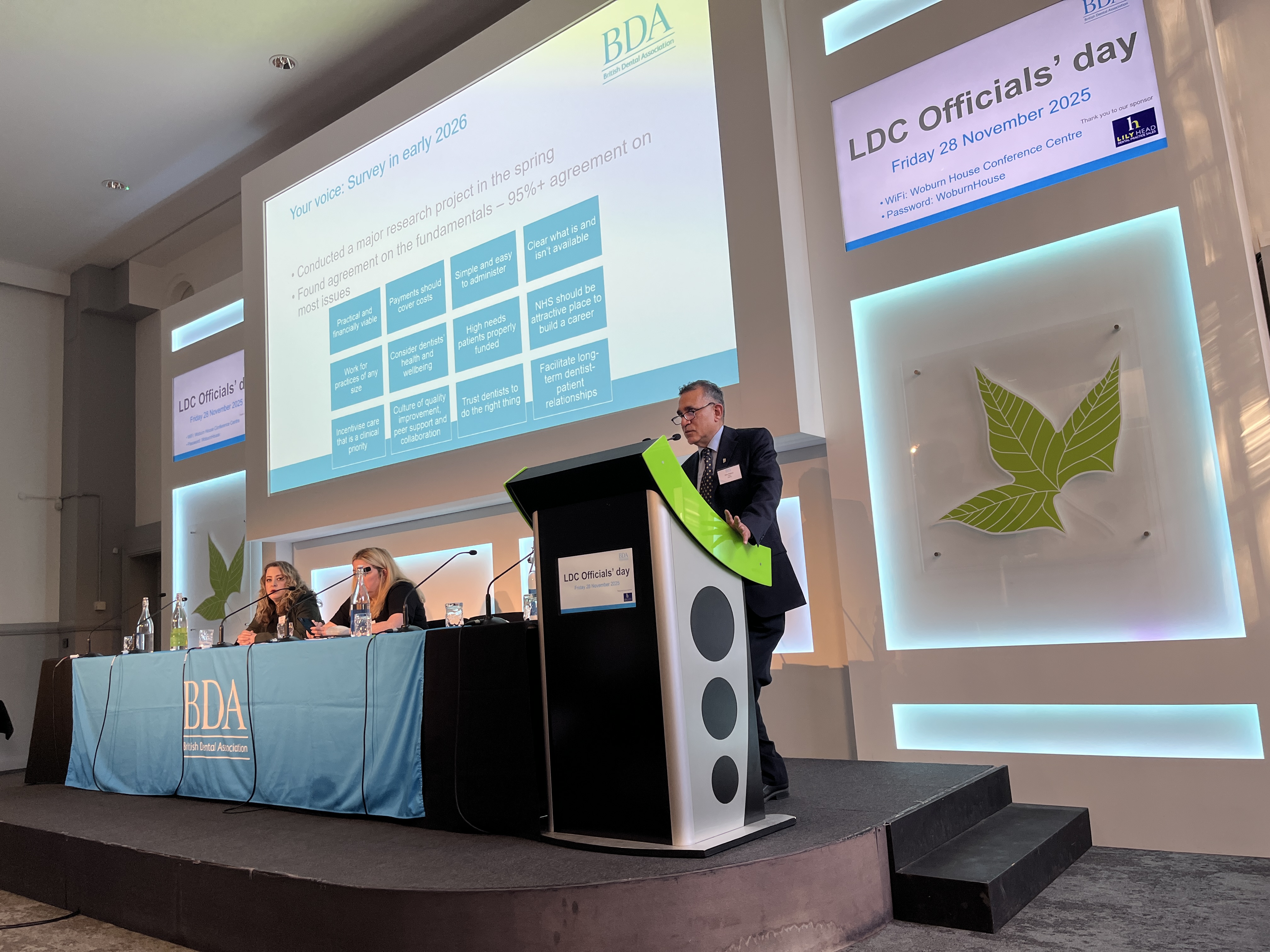
Earlier this year, we conducted a major listening exercise with all GDPs. You told us that you want a contract that is practical, financially viable, and simple. Where payments reflect the cost of treatments and patients know what is, and is not, available on the NHS. You told us it is important that the NHS sets a clear purpose for what dentistry is trying to achieve.
We wanted to build on this by bringing together nearly 200 Local Dental Committee representatives to consider some of the core issues for contract reform and give their views on how we move forward.
In workshops, participants discussed different ways that treatment activity can be paid for, how the negotiating team should respond to constrained NHS resources, how we ensure that the contract is prevention-focused, and how we build attractive and rewarding careers for GDPs.
Any contract needs to ensure that the payments, in whatever form, cover the costs of delivering the treatment.
Payments must match costs
A core message I heard across discussions is that any contract needs to ensure that the payments, in whatever form, cover the costs of delivering the treatment. That should be pretty basic, but we know that it has been very far from the reality of the NHS contract. The buy-one-get-one-free of the Units of Dental Activity (UDA) contract must go and the replacement must ensure that the payments match costs in a way that is fair and consistent.
The ‘Costs of Dentistry’ analysis that we secured will be critical to us achieving this. Following our evidence to MPs about the cross-subsidy from private dentistry that is propping up NHS dentistry, the DHSC has surveyed hundreds of practices on their finances to get an evidence base on the real costs of delivering NHS dental treatment. This will provide a basis for us to reset the payments associated with NHS care. I hope the Government will publish this research shortly.
This will be particularly important if the Government is to ensure that high needs patients get access to NHS dental treatment. The UDA contract, perversely, leaves these patients least well served. To put that right, dentists need confidence that they won’t be paying out of pocket to provide NHS treatment but will instead be properly paid for delivering it.
An attractive NHS dental system
Alongside broad principles, there were also specific ideas brought to the table by LDC representatives. This includes suggestions on capital grants to upgrade practices to deliver prevention-focused dentistry through full use of the dental team, and for greater support for newly qualified dentists to build their skills and confidence. While not directly related to how the contract pays us for clinical work, all of these will help inform how we secure an NHS dental system that is attractive to work in.
I’m determined to get it right and secure a reformed contract that is a genuine and transformative upgrade for us, and for our patients.
A blended contract
I’ve already set out why the General Dental Practice Committee believes that a blended contract is the best approach. Weighted capitation to facilitate prevention, activity payments to ensure treatment for high needs patients is properly remunerated, and sessional payments to underpin the time and risk needed for urgent care. All these clinical payments need to be backed up by practice allowances and performer incentives to ensure the NHS can run effectively and secure the workforce it needs.
Fundamentally, the test for the reformed contract is that it must be better than what we currently have. You might think that isn’t a very high bar given how dire the UDA system is, but we can’t take anything for granted. I’m determined to get it right and secure a reformed contract that is a genuine and transformative upgrade for us, and for our patients.
To do this it is vital that the profession’s voice is heard loudly and clearly in the negotiations to come.